Fresh Flavor on Every Ledge: The Best Culinary Herbs for Tiny Urban Spaces
Let's be honest: apartment living doesn't exactly scream "garden goals." Between the shared laundry room and the neighbor who blasts lo-fi beats at 11 p.m., growing your own food can feel like a fantasy reserved for people with actual yards. But here's the thing — herbs don't care about square footage. A sunny windowsill, a balcony railing, or even a kitchen counter under a grow light is genuinely all you need to pull off a thriving little herb garden.
At All Pot Seeds, we're big believers that a single well-chosen pot can change the way you cook. So if you've been eyeing those sad, overpriced herb bundles at the grocery store, consider this your permission slip to ditch them for good. These five culinary herbs are high-yield, forgiving, and perfectly suited to container life.
Basil: The Herb That Rewards Attention
Basil is dramatic. It wilts when it's thirsty, bolts when it's too hot, and throws a full-on tantrum if you let it flower without harvesting. But get into a rhythm with it, and basil is one of the most rewarding herbs you can grow in a pot.
Pot size: Go bigger than you think you need — at least a 6-inch pot per plant, though an 8- to 10-inch container will let roots spread and dramatically increase your yield. Sweet basil is the classic choice, but Genovese and Thai basil are both excellent container performers.
Light: Basil wants 6 to 8 hours of direct sun daily. A south- or west-facing windowsill is ideal. If your apartment doesn't get great natural light, a simple LED grow light on a timer does the trick.
Harvest tip: Pinch stems just above a leaf node — never strip from the bottom. This forces the plant to branch out rather than shoot straight up. Once you see flower buds forming, pinch those off immediately. Letting basil flower sends it into seed-production mode, and leaf quality drops fast.
Mint: The Overachiever You Need to Keep in Check
Mint is the herb world's enthusiastic overachiever. Left unchecked in a garden bed, it'll stage a hostile takeover of everything around it. In a container? It's perfectly contained — and incredibly productive.
Pot size: A 6- to 8-inch pot works well for a single plant. Mint spreads horizontally via underground runners, so a wider, shallower pot suits it better than a tall, narrow one. Spearmint and peppermint are the most useful for cooking and cocktails, but chocolate mint and apple mint are worth tracking down if you're feeling adventurous.
Light: Mint tolerates partial shade better than most herbs, making it a solid pick for east-facing windows or spots that only get 3 to 4 hours of direct light. That said, more sun means more vigorous growth.
Harvest tip: Cut stems back by about a third every few weeks to encourage bushy, leafy growth. Mint can look scraggly if you just pick leaves here and there — treat it more like a regular trim than a casual snip.
Oregano: Small Plant, Big Personality
Oregano is the herb that always punches above its weight. The dried stuff from the grocery store is fine, but fresh oregano — or oregano you've dried yourself from a plant you grew — is a completely different experience. It's intensely aromatic, slightly peppery, and surprisingly easy to keep alive.
Pot size: A 6-inch pot is adequate, but oregano appreciates good drainage above all else. Make sure your container has drainage holes and use a well-draining potting mix. Greek oregano is the most flavorful variety for culinary use and is widely available as seed.
Light: Full sun, ideally 6 or more hours. Oregano is Mediterranean in origin, so it's built for bright, warm conditions. It handles dry spells better than most herbs, which is great news if you're a forgetful waterer.
Harvest tip: Harvest before the plant flowers for peak flavor intensity. Oregano is one of the few herbs that actually dries beautifully — cut a few stems, bundle them loosely, and hang them upside down in a dry spot. You'll have pantry oregano that blows anything store-bought out of the water.
Chives: The Low-Maintenance Workhorse
If you've ever killed a houseplant and felt personally defeated, chives are your redemption arc. They're hardy, they come back reliably, and they're useful in a genuinely wide range of dishes — from scrambled eggs to baked potatoes to compound butters.
Pot size: Chives grow in clumps, so a 6-inch pot works for a single cluster. For a more productive setup, go with an 8- to 10-inch pot and plant several seeds in a cluster, which is actually how chives prefer to grow.
Light: Chives are flexible — they prefer full sun but manage reasonably well with 4 to 6 hours. They're also one of the better herbs for indoor grow-light setups.
Harvest tip: Snip from the top, leaving at least 2 inches of growth above the soil. Chives regrow quickly after cutting. If you let them flower (and the purple blooms are genuinely pretty), the flowers are edible and make a nice garnish — just know that flowering slows leaf production a bit.
Thyme: The Herb That Thrives on Neglect
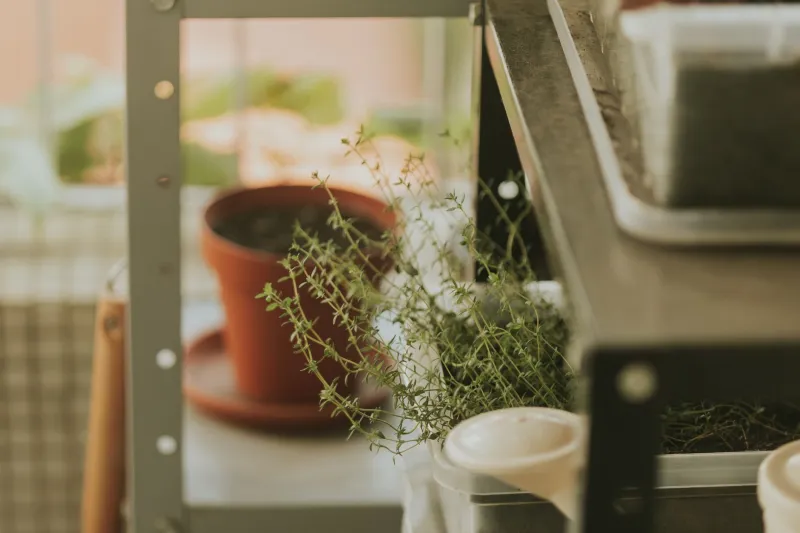
Thyme might be the most apartment-friendly herb on this list. It's drought-tolerant, compact, and comes in enough varieties to keep things interesting — English thyme for cooking, lemon thyme for a citrusy twist, creeping thyme if you want something that spills beautifully over a pot's edge.
Pot size: A 4- to 6-inch pot is plenty. Thyme has a relatively small root system and doesn't need a lot of soil volume. What it does need is excellent drainage — soggy roots are its one real weakness.
Light: Full sun, at least 6 hours. Thyme is another Mediterranean native, so think bright, warm, and slightly dry. A south-facing windowsill is prime real estate for this one.
Harvest tip: Snip young, tender stem tips rather than cutting into woody older growth. Regular light harvesting keeps thyme from getting leggy. In late spring, give the plant a more significant trim — cutting it back by about a third — to encourage a fresh flush of growth.
Putting It All Together
One of the best parts of container herb gardening is how modular it is. You can start with a single pot of basil and build from there, or go all-in and line your windowsill with five different varieties. Either way, the return on investment — in flavor, in cooking satisfaction, in the small daily pleasure of snipping something fresh — is hard to beat.
At All Pot Seeds, we carry seeds for all five of these herbs, along with growing guides and container recommendations to help you get started no matter how much (or how little) space you're working with. Because honestly? A great meal doesn't need a great garden. It just needs a good pot.