Beat the Clock: How to Catch Your Container Vegetables at Their Absolute Flavor Peak
There's a moment in every container garden's life that most people completely miss. It's not the day you finally pick that tomato or snip those basil leaves. It's the few days before that — a narrow, fleeting window when everything your plant has been working toward is right there, fully loaded and ready. Then it passes. The starch locks back up, the volatile compounds drift off, and what could've been a genuinely transcendent bite becomes just... fine.
The good news? Once you know what to look for, you can catch it every time.
What's Actually Happening Inside the Plant
Flavor isn't some vague quality that just shows up when a vegetable looks ripe. It's chemistry — specifically, a cascade of biochemical changes that your plant is running through on a pretty tight schedule.
For most fruiting vegetables, the big shift is starch-to-sugar conversion. As a tomato, pepper, or squash approaches full ripeness, complex starches break down into simple sugars like glucose and fructose. That's what gives a truly ripe tomato its sweetness. But here's the catch: that conversion peaks and then keeps going. Leave a tomato on the vine long enough past that peak, and the sugars start breaking down further into less flavorful compounds. The window is real, and it closes.
Herbs play by a slightly different set of rules. Their flavor comes primarily from volatile aromatic compounds — think the essential oils in basil, the terpenoids in thyme, the sulfur compounds in chives. These compounds are most concentrated right before the plant flowers. Once flowering kicks in, the plant redirects its energy toward reproduction, and those aromatic oils drop off fast. A basil plant that's just about to bolt is, counterintuitively, at its most intense. Give it another week and you're working with a shadow of what it was.
The 3-to-7-Day Window Everyone Ignores
Conventional harvesting advice is built around visual cues that are easy to see from across the patio: color change, size, the classic "squeeze test." Those cues aren't wrong — they're just late. By the time most vegetables hit the obvious markers of readiness, they've already been at or past peak flavor for somewhere between three and seven days.
This is especially true for container-grown plants, where the concentrated root zone and limited soil volume can accelerate ripening compared to in-ground gardens. Your pots are running hot, metaphorically speaking. The whole process moves a little faster, which means the window is even shorter.
So what does the actual peak look like, a few days before the obvious signs?
Visual Cues That Come Before the Obvious Ones
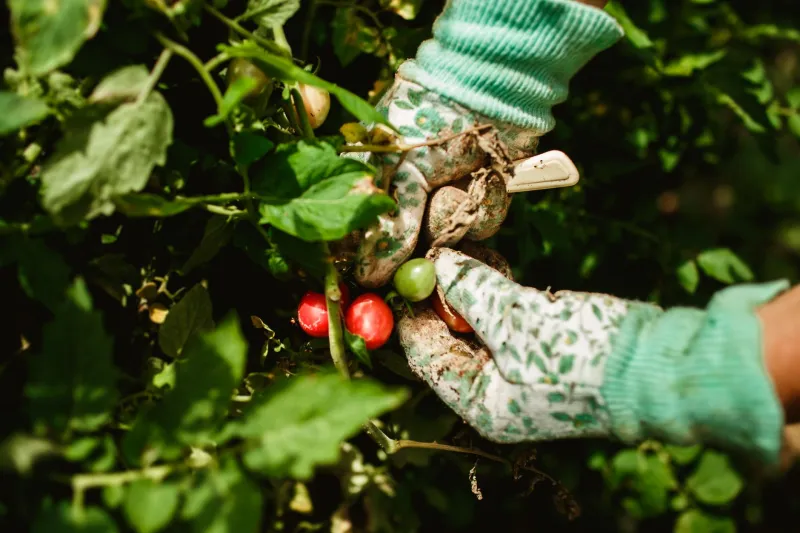
With tomatoes, watch for the very first blush of color change at the blossom end — the bottom of the fruit. That's where ripening starts. When you see just the faintest shift from green to yellow or pink at the bottom, the starch conversion is underway. You've got a few days before that color creeps up and becomes unmistakable. That early blush stage is often when flavor is building fastest.
With peppers, pay attention to the skin. A pepper that's approaching peak flavor will develop a very subtle sheen — almost a slight tautness to the surface. The skin looks like it's being pushed outward from the inside, because in a way it is. The flesh is at full hydration and the sugars are concentrated. Once the skin starts to soften slightly or wrinkle at the stem end, you've crossed the finish line and are heading downhill.
With leafy greens and herbs, the cue is actually growth rate. When a basil plant slows its leaf production and you notice the center stem starting to elongate toward a flower spike, the leaves currently on the plant are at maximum oil concentration. Harvest aggressively right then. Don't wait for the flowers to actually appear.
What Your Hands Are Telling You
Touch is underrated as a harvesting tool. A lot of experienced container gardeners develop what amounts to a tactile vocabulary for their plants — a sense of what peak ripeness actually feels like in their hands.
For tomatoes, the goal is a fruit that gives just slightly under gentle pressure but has no soft spots. Not firm like an unripe tomato, not yielding like an overripe one. There's a specific resistance — a springiness — that peak-ripeness tomatoes have that's hard to describe but easy to recognize once you've felt it a few times.
For cucumbers and zucchini, size is actually a better proxy than most people realize, but only when combined with feel. A zucchini that's 6 to 7 inches long and still feels dense and heavy for its size is at peak flavor. Let it get to 10 or 12 inches and you've got seeds and water where the flavor used to be.
For herbs, rub a leaf between your fingers. If the scent hits you immediately and intensely, you're in the window. If you have to work for it, you may have waited too long — or the plant hasn't quite gotten there yet.
How Container Growing Shifts the Math
One thing worth emphasizing for anyone growing in pots specifically: your environment is more variable than an in-ground garden, and that variability affects timing. A container sitting in full afternoon sun on a south-facing balcony in July is going to ripen fruit faster than the same variety growing in a pot on a shaded east-facing porch. The heat absorbed by dark-colored containers can push soil temperatures significantly higher than air temperature, which accelerates everything.
This is actually an advantage if you're paying attention. Your container plants are giving you faster feedback, more cycles per season, and more opportunities to dial in your harvesting instincts. Every pot is a small, manageable experiment.
Keep a simple note on your phone — even just the date you first noticed a color change or a slowdown in herb growth. After a season or two, you'll have a personalized timeline for each variety you grow that's far more accurate than anything printed on a seed packet.
The Payoff Is Worth the Attention
None of this requires fancy equipment or a botany degree. It just requires slowing down and actually looking at your plants a little more often than you might be used to. Walk by your pots in the morning. Run your fingers over the leaves. Check the bottom of your tomatoes, not just the top.
The difference between a vegetable harvested at peak and one harvested a week later isn't subtle. It's the difference between something that makes you stop mid-bite and something you eat without thinking. Container gardening gives you a real shot at that first experience, more reliably than almost any other way of growing food at home.
You've already done the work of planting, watering, and tending. Don't let the finish line slip past you.