Your Garden's Secret Schedule: How the Time of Day You Harvest Changes the Way Everything Tastes
You've nailed the variety. You picked a great potting mix. You waited patiently for the right stage of ripeness. And then you walked outside at 4 p.m. on a sweltering August afternoon, snipped a handful of basil, and wondered why it tasted kind of... meh.
Here's the thing nobody tells you when you're starting out with container gardening: your plants aren't the same from sunrise to sunset. They're running a biological schedule — a daily rhythm of sugar production, water movement, and volatile compound concentration — and if you're harvesting at the wrong hour, you're leaving real flavor on the table. Or, technically, in the pot.
This isn't gardening folklore. It's plant physiology, and once you understand it, you'll never grab a handful of herbs at random again.
What's Actually Happening Inside Your Plant Throughout the Day
Plants photosynthesize during daylight hours, converting sunlight into sugars. Those sugars don't just sit there — they move. Throughout the morning, sugars produced overnight and in the early light hours are still concentrated in the leaves and stems. As the day heats up, the plant shifts into a kind of stress management mode: it opens and closes its stomata (tiny pores in the leaves) to regulate water loss, and it starts redistributing those sugars toward roots and developing fruit.
By midday, especially in summer, many herbs are essentially in survival mode. They're managing heat. Volatile aromatic compounds — the stuff that makes basil smell like basil and mint smell like mint — begin to evaporate more rapidly as temperatures rise. You can literally smell this happening if you walk past a pot of herbs at noon versus 7 a.m. The noon version is broadcasting everything it has into the air. By the time you snip it, a lot of that aroma has already left the building.
Evening brings a different set of conditions. Photosynthesis slows and stops. Sugar movement continues, but the plant is winding down. For some crops, this is actually a useful window. For others, it's already too late.
The Morning Case: Why Most Herbs Want to Be Harvested Early
For culinary herbs — basil, cilantro, parsley, chives, tarragon, oregano — morning is almost universally the sweet spot. Aim for after the dew has dried (wet leaves are more prone to bruising and mold), but before the sun gets high and hot. In most of the US, that window is roughly 8 to 10 a.m. during summer months.
At that point, essential oil concentration is at or near its daily peak. The volatile compounds responsible for flavor and aroma haven't had a chance to off-gas into the warm air. The plant's tissues are still turgid from overnight water uptake, so the texture is crisp rather than slightly wilted.
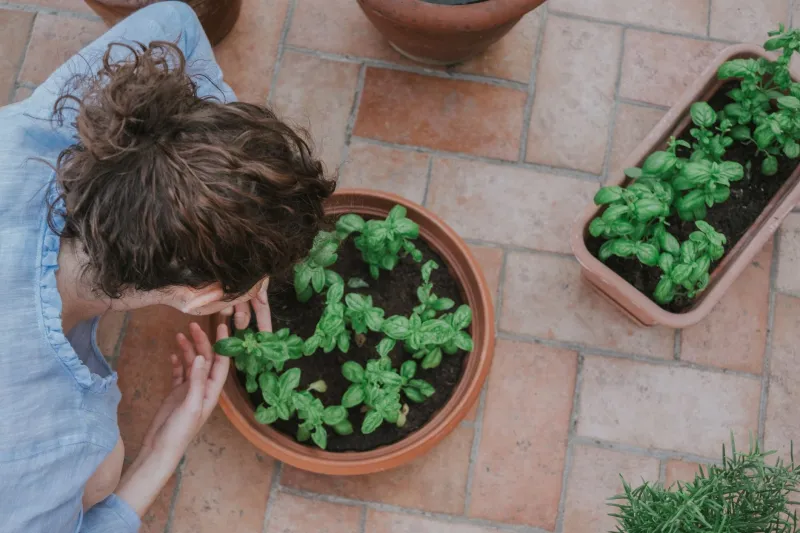
Basil in particular is dramatic about this. A morning harvest from a well-tended container plant can smell almost aggressively floral and spicy compared to the same plant cut at 3 p.m. If you've ever made pesto that tasted a little flat despite using fresh-from-the-pot basil, harvest timing may have been the culprit.
Mint follows the same pattern but is slightly more forgiving — its menthol compounds are robust enough to survive a bit of midday heat. Still, morning mint for cocktails, tea, or garnish is noticeably brighter.
Leafy Greens: Beat the Heat or Pay the Price
Lettuce, spinach, arugula, and other salad greens are particularly sensitive to temperature when it comes to both flavor and texture. Heat triggers the production of bitter compounds in many greens — it's part of the plant's stress response — and once those compounds accumulate, they don't disappear when you put the leaves in the fridge.
For container-grown greens, harvesting in the cool of the morning means you're catching leaves before daytime heat has had a chance to ramp up bitterness. There's also a practical texture benefit: morning greens are crisper and hold up better after washing. Afternoon-harvested spinach often goes limp almost immediately.
If you're growing arugula in a pot (which, by the way, does great in containers and tastes incredible when homegrown), morning harvest is the difference between that pleasant peppery bite and something that tastes almost aggressively sharp. The heat doesn't just wilt it — it chemically changes it.
Tomatoes and Peppers: A Different Rhythm Entirely
Here's where things get interesting. Unlike herbs and greens, ripe tomatoes and peppers don't follow the same morning-is-best rule. Their primary flavor compounds — sugars, acids, and a complex web of volatile aromatics — behave differently because these are fruits, not leaves.
For tomatoes, the best practice is to harvest in the morning but let them finish ripening at room temperature if they're not quite there yet. A tomato picked in the cool morning hours will have better cell integrity and hold its flavor compounds more effectively during the brief countertop ripening period than one picked in afternoon heat, which can stress the fruit and accelerate breakdown.
Fully ripe tomatoes that are ready to eat immediately? Morning still wins, mostly because the fruit is at its firmest and the flavor is most balanced before heat softens the texture and shifts the acid-sugar ratio.
Peppers are similar — morning harvest gives you the best texture and the most vibrant color. The capsaicin that creates heat in hot peppers doesn't fluctuate dramatically by time of day, but the overall flavor profile (especially in sweet peppers) is noticeably fresher in morning-harvested fruit.
What About Evening Harvests?
Evening isn't always the wrong call — it depends on what you're growing and why. Root vegetables like radishes and beets, if you're growing them in deep containers, can actually be pulled in the evening without much flavor penalty. Their sugars are more stable and less volatile than leaf compounds.
Some gardeners also prefer evening harvests for practical reasons: they're home from work, the light is pleasant, and they're cooking dinner. If that's your reality, go for it — just know that for herbs especially, you might compensate by harvesting a little more generously to account for the lower aromatic concentration.
One genuinely good reason to harvest in the evening: if you're growing herbs for drying rather than fresh use. Plants harvested in the late afternoon, after a full day of photosynthesis, have slightly higher sugar content in some species, which can contribute to a more complex dried product.
Building Your Own Harvest Schedule
The practical takeaway here is pretty simple. Make a loose mental map of what's in your containers and when each type of plant is best picked:
- Herbs (basil, cilantro, parsley, oregano, thyme): Morning, after dew dries, before 10 a.m.
- Leafy greens (lettuce, spinach, arugula): As early as you can manage — cool temperatures are everything.
- Tomatoes: Morning for the best texture and flavor balance.
- Peppers: Morning, especially for sweet varieties.
- Root vegetables: Flexible, but morning is still a reasonable default.
None of this requires an alarm clock or a rigid routine. It just requires paying a little attention to when you're heading outside — and understanding that your plants have already done most of the work. You just have to catch them at the right moment.
That's really what growing your own food is all about. You put in the effort to choose good seeds, tend your pots, and wait. The last step — harvesting at the right hour — is almost embarrassingly simple once you know it matters. And the payoff in your kitchen is real.