Plant It Once, Eat From It for Years: The Container Gardener's Guide to Perennials and Self-Seeders
The Replanting Treadmill Is Optional
Every spring, millions of container gardeners do the same thing: pull out last year's dead plants, refresh the potting mix, head to the nursery or dig out the seed packets, and start over from zero. It's a ritual, and there's something satisfying about the fresh start.
But it's also a lot of work. And it means you're perpetually growing young plants — which are rarely the most flavorful version of what they can become.
There's another approach, and it's one that experienced gardeners have quietly been using for generations. By combining true perennial plants with strategic self-seeders and smart overwintering techniques, you can build container gardens that don't just survive from year to year — they actually get better. More established root systems. More nuanced flavor. More productive with less effort.
This isn't a niche technique. It's a shift in how you think about your pots.
Start With True Perennials — The Anchors of Your Container Garden
The foundation of a multi-year container garden is a core of genuine perennial plants: species that, with the right care, will come back reliably without any replanting on your part.
For US container gardeners, these are some of the most rewarding options:
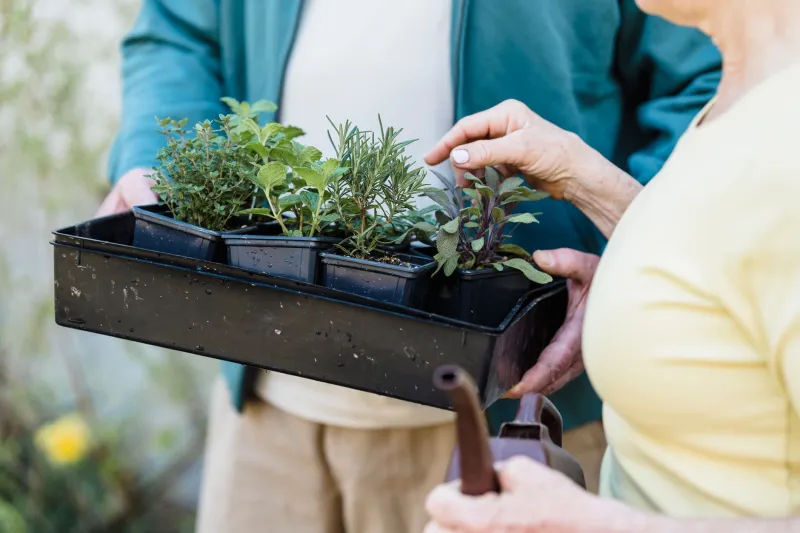
Rosemary is one of the great container perennials. In USDA hardiness zones 7 and warmer (which covers most of the South, the Southwest, and coastal California), rosemary can live outdoors year-round in a pot and will develop into a substantial, woody specimen over several years. Older rosemary plants have a depth of flavor that young nursery starts simply can't match. In colder zones, bring it inside for winter — it handles indoor conditions reasonably well near a bright window.
Thyme is similarly tenacious. It's cold-hardier than rosemary (many varieties survive into zone 4 or 5), and a well-established thyme plant in a pot develops a complex, almost woody character over multiple seasons. Let it sprawl over the edges of your container and it'll reward you with a carpet of small, intensely flavored leaves.
Chives are practically indestructible. They die back in cold winters and return from the roots each spring, and they'll do this reliably in pots for many years. As a bonus, if you let a few flower heads go to seed, you'll get natural self-seeding into adjacent pots — a pleasant, edible surprise.
Mint, in all its varieties, is famously aggressive — which makes it perfect for containers, since the pot naturally contains its spreading habit. Established mint roots overwinter well in most US climates, and a three-year-old mint plant in a large pot is dramatically more productive than a fresh transplant.
Sorrel is an underused perennial green that deserves far more attention from American container gardeners. It returns reliably each spring, produces tart, lemony leaves, and handles partial shade better than most culinary herbs. Once established, it essentially takes care of itself.
Lemon verbena behaves as a perennial in zones 8 and warmer. In colder areas, it can be overwintered indoors — it will drop its leaves but hold its roots, and it leafs out again in spring with the same intense citrus fragrance that makes it so valuable in the kitchen.
The Self-Seeder Strategy: Planned Spontaneity
Beyond true perennials, there's a second category of plants that can dramatically reduce your replanting workload: self-seeders. These are annuals and biennials that, when allowed to complete their full life cycle — including flowering and setting seed — will drop viable seeds that germinate on their own the following season.
This requires a shift in gardening instincts. Most of us are trained to deadhead flowers, pull bolting plants, and keep things tidy. But for self-seeding to work, you have to let some plants finish their full arc.
Dill is one of the best self-seeders for container gardens. Let one or two plants go to flower and seed each season, and you'll find dill seedlings appearing in nearby pots the following spring. These volunteers are often more vigorous than transplants, and they're perfectly adapted to your specific microclimate.
Cilantro bolts quickly in warm weather — which is usually considered a problem, but becomes an asset in a self-seeding strategy. Let bolted plants go to seed, and you'll have a steady supply of new seedlings cycling through your pots all season.
Parsley, a biennial, produces its best leaf growth in its first year, then flowers and sets seed in its second. If you let it complete this cycle, the seeds it drops often germinate without any help from you.
Nasturtiums self-seed prolifically and aggressively. Both the leaves and flowers are edible — peppery and bright — and a pot that hosted nasturtiums one summer will often sprout new plants on its own the following spring.
Arugula bolts and seeds easily, and the seeds are tiny but viable. A pot of arugula that's been allowed to flower will often surprise you with a second generation of seedlings that needs no planting at all.
Overwintering: The Bridge Between Seasons
For container gardeners in zones 5 through 7, overwintering is the skill that makes multi-year growing possible. The goal is to keep root systems alive through winter so plants can resume growth in spring without starting from scratch.
A few practical techniques that work well:
Cluster pots together against a south-facing wall. Grouped pots lose heat more slowly than isolated ones, and a south-facing wall radiates warmth during the day. This simple adjustment can push your effective hardiness zone up by half a zone or more.
Insulate pots with burlap or bubble wrap. Wrapping the outside of containers prevents the rapid freeze-thaw cycles that damage roots. The plant can tolerate cold; what kills roots in pots is the repeated expansion and contraction of freezing and thawing soil.
Move tender perennials to an unheated garage or basement. Many herbs — rosemary, lemon verbena, bay laurel — will survive winter in a space that stays above freezing even if it gets no light. They'll look rough by spring but will recover quickly once moved back outside.
Cut back but don't dig up. Resist the urge to pull out seemingly dead perennial herbs in fall. Cut them back to a few inches, leave the roots in place, and wait. Many plants that look completely dead in March are pushing new growth by April.
Building a Multi-Year Container Rotation
Once you have perennial anchors and self-seeder strategies in place, you can start thinking about your containers as a long-term system rather than a seasonal project.
A practical framework: designate some pots as permanent homes for perennials (rosemary, thyme, chives, mint). These pots get a top-dress of compost each spring and otherwise stay in place. Designate other pots as your annual rotation spaces, where you grow vegetables and fast annuals, but allow at least one or two plants in those pots to self-seed each season.
Over three or four seasons, this system becomes surprisingly self-sustaining. Your perennial pots develop richer root ecosystems. Your self-seeding annuals become locally adapted. Your overall replanting workload drops significantly — and your harvest, almost without exception, gets more interesting.
You planted it once. Now let it pay you back.