What's Living in Your Pot? The Microbial World That Makes Your Vegetables Actually Taste Good
Most container gardeners obsess over sunlight, watering schedules, and fertilizer ratios. Fair enough — those things matter. But there's a whole dimension of growing that barely gets mentioned on seed packets or in beginner guides, and it might be the single biggest factor separating a tomato that makes you close your eyes from one that tastes like it came out of a plastic clamshell at the grocery store.
We're talking about soil biology. Specifically, the invisible ecosystem of bacteria, fungi, and microorganisms living — or struggling to survive — inside your container potting mix.
Why Most Potting Mixes Are Biologically Dead on Arrival
Open a fresh bag of commercial potting mix and take a sniff. It smells clean, maybe a little earthy, sometimes faintly chemical. What you're usually getting is a blend of peat moss or coco coir, perlite, and some slow-release fertilizer pellets. It's engineered to drain well and not compact. It does that job fine.
What it doesn't do is teem with life.
Most bagged potting mixes are either heat-treated or processed in ways that eliminate microbial activity. That's actually intentional — manufacturers want a sterile, consistent product that won't introduce pathogens or unpredictable variables. But here's the tradeoff nobody talks about: sterile soil is essentially an inert growing medium. Your plants can survive in it, sure. But they're working a lot harder than they need to, and they're missing out on a support system that nature built over millions of years.
In healthy, living soil — whether that's a backyard garden bed or a well-tended container — bacteria and fungi form complex relationships with plant roots. These microorganisms break down organic matter into forms plants can actually absorb. They produce compounds that help roots take up specific nutrients more efficiently. Some of them even communicate chemical signals that influence how a plant expresses flavor compounds like sugars, acids, and aromatic oils.
When that ecosystem is absent, your plants are essentially eating a stripped-down diet. They grow. They fruit. But the nuance just isn't there.
The Flavor Connection Is More Direct Than You'd Think
Here's where it gets genuinely interesting. The flavor of a vegetable or herb isn't just about genetics or how much you watered it. Flavor is metabolic — it's the result of how a plant processes nutrients and responds to its environment.
Mycorrhizal fungi, for example, extend a plant's root system far beyond what the roots alone could reach. In a container, where root space is already limited, that network becomes even more valuable. These fungi help shuttle phosphorus and micronutrients directly into plant tissue. Phosphorus plays a role in energy transfer within the plant, which affects everything from fruit development to the concentration of flavor compounds in your basil leaves.
Soil bacteria contribute differently. Certain bacterial strains help convert nitrogen into forms plants can absorb gradually rather than in one overwhelming dose — which is part of why synthetic fertilizer can produce lush, fast-growing plants that taste watery or bland. The plant is growing faster than it can develop complexity.
When microbes are doing the work of nutrient cycling, plants tend to develop at a pace that allows flavor to accumulate. It's slower, sometimes. But the payoff in your kitchen is real.
How to Actually Build Living Soil in a Container
The good news is that you don't need to buy expensive specialty products or follow a complicated protocol. Building soil biology in your pots is mostly about giving microorganisms something to eat and a reason to stick around.
Start with compost. Even a small amount mixed into your potting medium makes a significant difference. Finished compost is loaded with microbial life and the organic matter that sustains it. Aim for roughly 20 to 25 percent compost by volume when you're filling a new container. If you're refreshing an existing pot between seasons, work a few handfuls into the top layer rather than replacing everything.
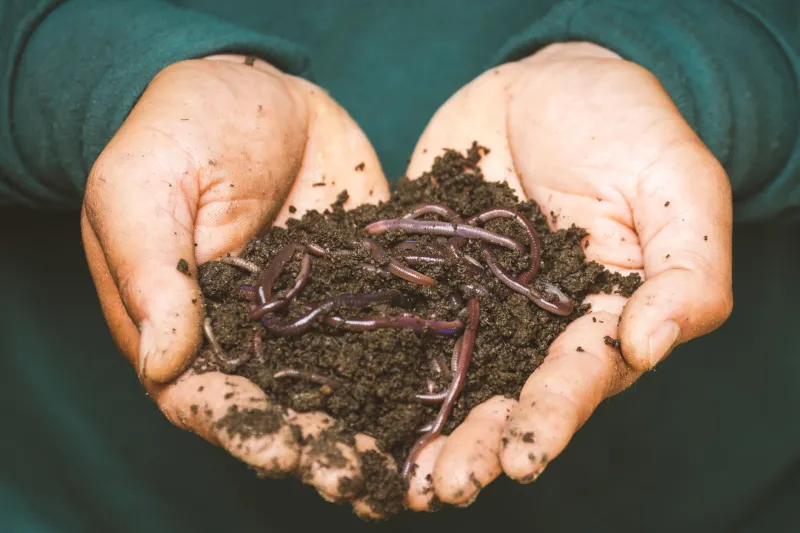
Add worm castings. This is one of the most underrated amendments for container growers. Worm castings are essentially pre-digested organic matter — microbe-dense, gentle on roots, and effective in small quantities. A cup or two mixed into a five-gallon pot can noticeably shift the biological activity in your soil over the course of a season.
Use a mycorrhizal inoculant when transplanting. These products are widely available at garden centers and online, and they're genuinely worth using. When you're transplanting seedlings, dust a small amount of inoculant directly onto the root ball before it goes into the pot. The fungi colonize the roots and start building that network within a few weeks.
Lay off the harsh synthetic fertilizers. This one's counterintuitive, but heavy synthetic fertilizer use can actually suppress microbial populations in your soil. High salt concentrations from synthetic inputs stress bacteria and fungi. If you want to feed your plants, lean toward liquid kelp, fish emulsion, or compost tea — inputs that feed the soil food web rather than bypassing it.
Keep your soil consistently moist, not waterlogged. Microbial life needs moisture to function, but anaerobic (oxygen-deprived) conditions kill off the beneficial aerobic microbes you want. Good drainage matters here — which is one area where commercial potting mixes actually do you a favor.
What You'll Notice When It's Working
This isn't the kind of change that shows up overnight. Soil biology takes a few weeks to establish, and you'll really start to see the results by mid-season or in your second year using the same amended mix.
But when it kicks in, the signs are pretty clear. Your herbs will smell more intense when you brush against them. Tomatoes will have that acidic-sweet balance that makes them worth eating out of hand. Salad greens will have a complexity that makes plain olive oil and salt feel like enough of a dressing.
You'll also notice your plants tend to bounce back faster from stress — a hot week, a missed watering, a pest pressure that would have set them back harder in sterile mix. A living soil ecosystem builds resilience, not just flavor.
The Pot Is a Tiny Ecosystem. Treat It That Way.
There's a temptation to think of container growing as inherently limited — a compromise for people who don't have a yard. But a well-managed pot is actually a pretty remarkable little system. You control everything that goes into it. You can build the exact environment your plants need.
The gardeners who grow the most flavorful produce aren't necessarily the ones with the biggest setups or the most expensive seeds. They're the ones who understand that the soil is alive — or should be — and who tend to that life with as much care as they give the plants growing out of it.
Start with a handful of compost and a little curiosity. The flavor difference will do the rest of the convincing.